Technology informed by how you move. Care guided by what you need.
NEUBIE, the NeuFit Method, VOLTRA I, and SmartTools BFR cuffs can inform individualized work with movement, rehabilitation, strength, and physical performance.
Your history, goals, and response guide how these tools fit into one integrative 60-minute session with Wesley.
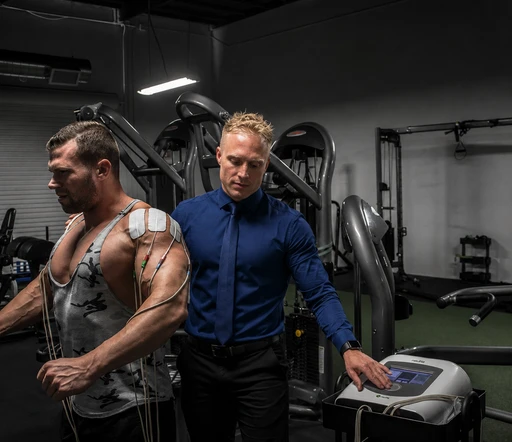
NEUBIE, short for Neuro-Bio-Electric Stimulator, is a neuromuscular electrical stimulation device that uses pulsed direct current delivered through electrodes placed on the skin.
NeuFit is the company and associated method for using the device with assessment and guided movement. Stimulation may be paired with selected exercises to work on muscle recruitment, movement, and physical function.
In my practice, the activity, electrode placement, and settings are selected according to your needs and adjusted in response to your feedback. The device supports the work; the person’s experience and clinical judgment guide it.
What this looks like in a session: We begin with a movement or task relevant to your goals and observe your starting point. When appropriate, stimulation is introduced with guided movement, and we revisit the task to understand your response. Changes in comfort or movement inform the plan; they are not a stand-alone diagnosis or a promise of a particular recovery timeline.
Garrett Salpeter, founder of NeuFit, discusses the use of direct current in electrical stimulation.
Explore this perspective on the technology behind NEUBIE, then learn how assessment, guided movement, and your individual response inform its use in the clinic.
An introduction to the NeuFit Method. See how the method brings electrical stimulation and movement into the rehabilitation and performance conversation.
This overview explains the method. Your own care plan and response are individual.
When pain, injury, surgery, or reduced strength changes the way you move, care begins with understanding your current abilities and what you want to return to.
When appropriate, NEUBIE can be incorporated into guided movement and rehabilitation exercises. We observe your response and adjust the work around your needs, relevant precautions, and stage of recovery.
The focus may be as practical as walking more comfortably, rebuilding strength, or returning to activities that matter to you.
02 / PROGRESS
Strength & performance.
For someone working toward greater physical capacity, the emphasis may shift toward strength, movement quality, and the demands of training or sport.
NEUBIE and appropriate resistance exercises may be incorporated into selected activities. Your goals, training history, recovery, and response guide the progression.
Rehabilitation and performance can be connected parts of the same journey. Your session evolves with you.
VOLTRA I / PROGRESSIVE RESISTANCE
Adjustable resistance. Purposeful progression.
A different tool within the same individualized approach.
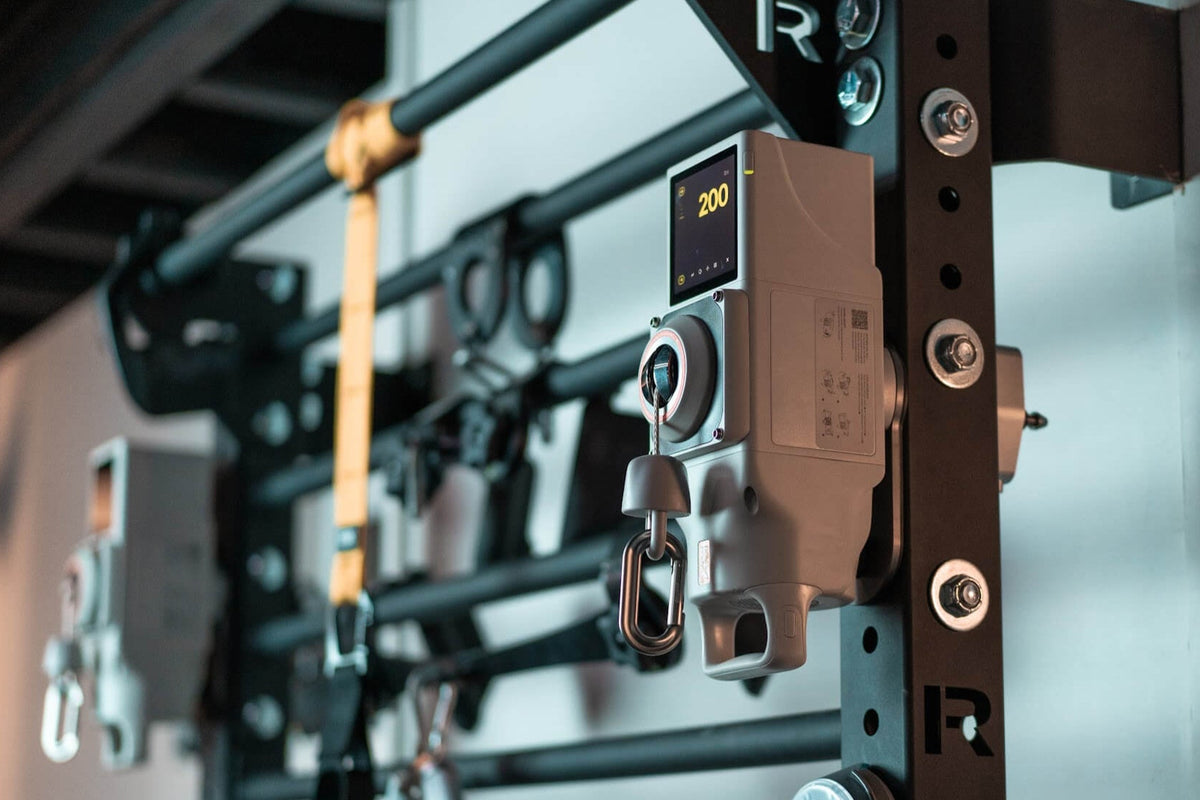
I also use VOLTRA I by Beyond Power, a motorized cable resistance device. It provides adjustable resistance for selected strength and movement exercises.
Its programmable resistance can change the load during the lifting and lowering phases of a movement. That offers options for tailoring the challenge to the exercise, your current capacity, and your goals.
NEUBIE delivers electrical stimulation. VOLTRA I provides external resistance through a cable. They have different roles, and either may be selected when appropriate. Neither is required in every session.
The aim is a considered progression of movement and strength. The exercise and load are chosen with you and adjusted to your response.
Watch Beyond Power’s introduction to the compact, rack-mounted resistance system. In your session, the exercise, resistance, and progression are selected around your current abilities and goals.
I use SmartTools blood flow restriction (BFR) cuffs in the clinic when appropriate. BFR pairs selected exercises with controlled cuff pressure around the upper arm or thigh to temporarily restrict blood flow during exercise.
This can provide a muscle-training stimulus with lighter external loads, offering an option when heavier resistance is not appropriate or well tolerated. Whether it fits your rehabilitation or performance goals depends on your current abilities, health history, and stage of recovery.
Cuff pressure, exercise selection, and your response are considered together. BFR is one possible part of your integrative session, alongside appropriate movement and other tools. You do not need to book it separately.
Suitability is reviewed before use. Share relevant circulation or clotting concerns, medical conditions, medications, and recent procedures so the work can be adapted or another approach selected.
Explore blood flow restriction training in this video. In the clinic, suitability, cuff pressure, and exercise selection are guided by your needs and response.
Discuss your history, current concerns, goals, and relevant precautions. Observe the movements or activities that matter to you.
02
Explain & explore.
If a device is appropriate, discuss its role and what to expect. Select the activity and adjust stimulation or resistance with your feedback.
03
Reassess & integrate.
Review your response and use it to guide next steps. Relevant observations and practical guidance support the work beyond the clinic.
RESEARCH & PERSPECTIVE
Understand the evidence. Keep the individual in view.
Research on NEUBIE includes studies of muscle responses, training adaptations, and specific clinical populations. The relevance of a study depends on who was studied, the treatment used, what it was compared with, and which outcomes were measured.
Research on electrical stimulation broadly is not automatically evidence for every NEUBIE application. A study finding or another person’s experience cannot predict your result.
We use your goals and response to inform ongoing care, rather than promising a fixed recovery time or percentage improvement.
You may feel tingling or muscle activity around the electrodes. Sensation varies with placement, settings, and the person. Settings are adjusted with your feedback; tell Wesley about discomfort so the work can be changed or paused.
How is NEUBIE different from TENS or traditional muscle stimulation?+
The current and the clinical purpose differ. NEUBIE uses pulsed direct current. TENS is commonly used for pain relief, while conventional electrical muscle stimulation is often used to produce muscle contractions. Electrical stimulation devices vary in waveform, settings, and intended use.
NEUBIE is paired with purposeful movement. In this clinic, stimulation may accompany selected exercises to explore muscle recruitment, coordination, strength, and movement. Your feedback and response guide the settings and progression.
Mapping helps guide the session. We may explore areas that feel unusually sensitive to stimulation, then assess relevant movements before and after. This contributes to clinical observation; it does not diagnose damaged nerves or prove that a muscle is “blocked.”
The aim is to support movement and function within your rehabilitation or performance plan. The waveform alone does not establish that a treatment is better for every person or condition, and a specific outcome or recovery speed cannot be promised.
No. Suitability and relevant precautions are reviewed first. NeuFit lists pregnancy and cardiac pacemakers among its contraindications. Share your medical history, implanted devices, recent procedures, and relevant restrictions before use. This is not an exhaustive list; current device instructions and your clinical situation guide the decision.
How many sessions will I need?+
Recommendations depend on your goals, current abilities, health history, and progress. Frequency and next steps are discussed individually and revisited as your response becomes clearer. No particular number of visits or outcome is guaranteed.
Is BFR appropriate for everyone?+
No. Blood flow restriction requires individual screening and appropriate supervision. Circulation problems, a history of blood clots, certain cardiovascular conditions, medications, or recent procedures may affect suitability. Discuss your history with Wesley before use. The cuff pressure and exercise are individualized; BFR is not required in every session.
What should I wear?+
Comfortable shorts and a loose-fitting shirt are useful for movement and access to the area being addressed. You can bring a change of clothing if needed.
Do I book NEUBIE, VOLTRA I, or BFR separately?+
No. Book your integrative session with Wesley. Appropriate tools and exercises are selected together. The same session rates apply regardless of which techniques are used.
Start with what you want to return to.
One integrative 60-minute session. Individualized care, relevant tools, and thoughtful next steps.